 Loading... Please wait...



Blogging - vin
How to Pick the Correct Clutch for your Car
By far the most common question we receive here at Gripforce.com is whether a specific performance clutch kit, replacement flywheel, or internal hydraulic slave cylinder will fit a particular car or truck. Because vehicle manufacturers frequently introduce mid-year production splits, transmission spline revisions, engine trim updates, and crankshaft bolt pattern changes, simply knowing your car's model year is often not enough to guarantee a 100% bolt-on fit.
Whether you are replacing a slipping OEM clutch on your daily commuter or upgrading to a heavy-duty Stage 2 or Stage 3 setup for the track, ordering the wrong clutch kit leads to frustrating project delays and expensive return shipping. In this guide, we walk you through the foolproof, step-by-step method to decode your vehicle's exact build specifications and ensure guaranteed drivetrain compatibility every single time.
Step 1: Find Your Car's VIN (Vehicle Identification Number)
A vehicle's VIN (Vehicle Identification Number) is a standardized, unique 17-digit serial number assigned to your car during factory assembly. Think of it as your car's automotive DNA: it tells parts specialists, dealerships, and fitment databases the exact engine code, chassis platform, transmission type, assembly plant, and precise production date of your vehicle.
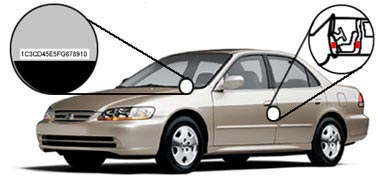
You can quickly locate your car's 17-digit VIN in several easy-to-access places:
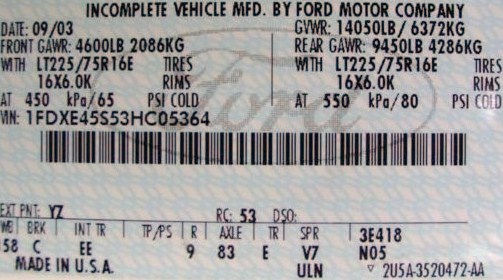
- Driver-Side Door Jamb: Look at the federal safety certification decal affixed to the driver's door pillar or post. This sticker also displays your vehicle's exact month and year of manufacture (crucial for mid-year production splits).
- Lower Driver-Side Windshield: Look through the windshield glass from the outside of the vehicle at the lower corner of the dashboard on the driver's side.
- Vehicle Paperwork: Your 17-digit VIN is printed on your state vehicle registration card, title certificate, auto insurance identification card, and recent maintenance receipts.
Step 2: Decode Your Car's VIN Number for Exact Drivetrain Specs
Your VIN number is packed with specific characters that identify your exact drivetrain configuration. For example, digits 4 through 8 (the Vehicle Descriptor Section) indicate your engine displacement (e.g., 1.8L vs. 2.0L vs. 2.4L), engine family code (e.g., M50, S52, K20, 2ZZ-GE, LS1), and factory aspiration (Naturally Aspirated vs. Turbocharged vs. Supercharged).
Decades ago, mechanics had to cross-reference thick physical manuals to decipher these codes. Today, you can use fast, reliable online VIN lookup tools, such as this free VIN decoder, to instantly retrieve your vehicle's factory build sheet and technical specifications.
Step 3: Match Up Your Car's Info with Our Vehicle Selection Tool
Once you run your VIN through the decoder, your vehicle summary report will clearly display your verified vehicle attributes:
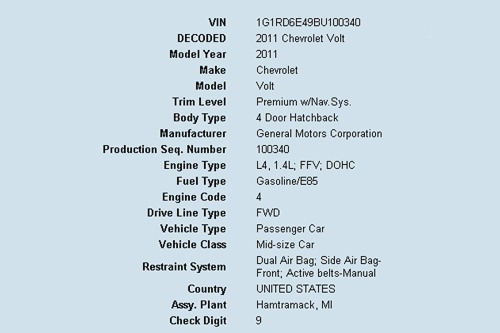
Critical Technical Dimensions to Verify Before Ordering:
- Production Build Date (Month/Year): Many manufacturers change clutch disc diameters, pressure plate bolt circles, or throwout bearing designs mid-year (for example, "Models built up to 05/1995" vs. "Models built from 06/1995"). Checking your door jamb sticker prevents ordering parts for the wrong half of the model year.
- Engine Trim & Displacement: Base models often share the same vehicle body as sport trims but use different flywheel bolt patterns (e.g., 6-bolt vs. 8-bolt crankshafts on Ford Mustang 4.6L engines) and smaller clutch disc diameters.
- Transmission Model & Spline Count: Manual gearboxes use specific input shaft spline counts (such as 10-spline, 14-spline, 21-spline, or 24-spline) and input shaft diameters (e.g., 7/8", 1", or 1-1/8"). The clutch disc hub must match your gearbox spline precisely.
- Flywheel Step Height: Flat flywheels vs. stepped flywheels require specific pressure plate geometries. If you are upgrading from a factory dual-mass flywheel (DMF) to a single-mass conversion flywheel, you must install a matched conversion clutch kit.
Ready to Find Your Clutch?
Use your decoded Year, Make, Model, and Engine to browse our full catalog of OEM replacements, Stage 1 through Stage 4 clutch kits, lightweight flywheels, and hydraulic components.
Search Clutches by Vehicle →What If Your Car Has an Engine Swap or Transmission Conversion?
If your project car features a modified drivetrain (such as an LS V8 swap into a Nissan chassis, a Honda K-Series swap, or a custom 6-speed transmission conversion), the factory VIN will only describe the original body chassis. In these scenarios, you must match parts using the mechanical specifications of your swap:
- Flywheel & Pressure Plate Bolt Pattern: Matches the Engine Crankshaft.
- Clutch Disc Spline Count & Hub Diameter: Matches the Transmission Input Shaft.
- Throwout (Release) Bearing & Slave Cylinder: Matches the Transmission Bellhousing & Clutch Fork.
Frequently Asked Questions (FAQ) About Clutch Fitment
How do I know what clutch stage I need once I verify fitment?
Match your clutch stage to your vehicle's torque output and driving style. Stage 1 is ideal for stock to mild bolt-on daily drivers; Stage 2 (Carbon Kevlar) provides higher heat capacity and extended life for spirited street and canyon driving; Stage 3 (Ceramic 6-Puck) is engineered for aggressive track and drift use; and Stage 4/5 is reserved for dedicated race builds.
Do all clutch kits include the release bearing and alignment tool?
Most complete Gripforce and FX Racing clutch kits include the heavy-duty pressure plate, friction disc, release (throwout) bearing, pilot bearing/bushing (where applicable), and alignment tool. Always check the package contents list on the product page to verify included hardware.
Why is my clutch slipping after a brand-new installation?
The most common causes of premature slipping on a newly installed clutch are: (1) failing to observe the mandatory 500-mile street stop-and-go break-in period, (2) installing a new disc against an unresurfaced or glazed flywheel, or (3) oil/grease contamination on the friction surface during installation.
Need Professional Help Confirming Your Fitment?
If you are unsure about mid-year production splits, aftermarket flywheel compatibility, or custom engine swaps, Contact Our Technical Support Team with your 17-digit VIN and power modifications for guaranteed fitment guidance.
Recent Posts
- » BMW E36 & E46 Clutch & Flywheel Upgrade Guide: FX Stage 2 vs. Stage 3 (M3, 325i, 328i, 528i, Z3)
- » The Ultimate Clutch Replacement & Upgrade Guide: Choosing the Right Clutch Kit
- » Gripforce Smashes +100,000 eBay Feedback
- » Thank you for making the new Gripforce.com a resounding success
- » How to Pick the Correct Clutch for your Car








Company Info
Account Info
Customer Service
Our Policies
STAY CONNECTED
WITH US FOR THE LATEST NEWS


SIGN UP FOR OUR NEWSLETTER
All prices are in USD Copyright 2026 Gripforce
